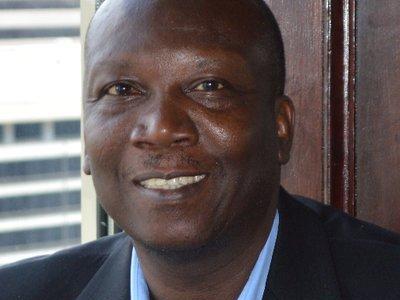
Kon Kornelio Madut, Ph.D.
30 Montana Way
Ottawa, ON K2J 4M5 Canada
Phone: 613-843-9560 (H)
Phone: 613-560-0624 ext. 24679 (W)
Email: kon.madut@gmail.com
Kon works for the City of Ottawa, Employment and Social Services for the last Fifteen years. In 2013, I have joined the University of Ottawa, Faculty of Social Sciences as a part time Professor at the Schools of Political Studies, the School of Sociological and Anthropological Studies and the department of geography. Courses taught include the Sociology of Work and Organization, Immigration Policies and Multiculturalism in Canada and Quebec, Comparative politics: Identity issues and Social Geography.
Internationally, I have worked as a Research Consultant for The Royal Tropical Institute (KIT), Amsterdam, in South Sudan Health Action and Research Plan Project (SHARP). The SHARP project aims to increase the overall quality and accessibility of reproductive health services by empowering South Sudan’s Ministry of Health to manage and deliver quality services.
My involvement in SHARP research project and subsequent visits to Africa has open new avenue to develop programs for street kids and their families in war affected nation of South Sudan. Nonetheless, I have continued to build literature in health, poverty, social inequality and politics of identity in South Sudan to find a better construction for institutional reform and peaceful coexistence in a multiethnic society.
Conferred a Ph.D. in Social Science by Tilburg University, The Netherlands/ Taos Institute-program ; a Masters of Liberal Studies (MLS) degree from Fort Hays State University/FHSU, Kansas , USA, BA in Sociology from Alexandria University, Egypt, Social Services Diploma from Algonquin College and Certificate in University Teaching from the University of Ottawa.
Research work and interest centered on immigration, employment, ethnicity, health and socio-cultural issues, and the interplay between them as they affect the course and pace of social relations and human well-being. These include global and local issues of cultural and ethnic diversity, construction of groups or individuals identity, communities and its influences on health and human well-being.
Publications:
- Madut, K. (forthcoming). Poverty or governance? The Case of poor and underserved in Sudan and South Sudan: Submitted to the Journal of Poverty and Public Policy: Wiley Online Journal.
- Madut, K. (2017). Spatiality of ethnic identity and construction of sociopolitical interaction in South Sudan. Human Geographies. Vol. 11(2), pp.182-195. Journal of Human Geographies. DOI:10.5719/hgeo.2017.112.4.
- Madut, K. (2016). Neo-liberalism: Employability, and the labor mobility among racialized migrants. Canada’s Study. International and Multidisciplinary Journal of Social Sciences, 5(2), 128-151. doi:10.17583/rimcis.2016.1964.
- Madut, K. (2016). How do racialized migrants cope with challenges of labor market integrations and resettlement? Amsterdam Social Science: 7(1), 93-110. University of Amsterdam.
- Mkandawire, Arku, Atari, Madut, Luginaah, and Dixon (2015). “My house is the hospital”: Housing and Health and Wellbeing among Persons Living with HIV/AIDS in Northern Malawi”, Journal of Health Care for the Poor and Underserved 26 (4), 1246-1264
- Madut, K. (2015). Stages of labor market integration and strategies among the racialized migrants-study, Journal of Population Studies, Vol. IX, (1), pp. 26-38: ISSN 1843-5998.
- Madut, K. (2015). “Institutional development, governance and ethnic politics in South Sudan”, Glob Econ, Vol. 3 (147), doi:10.4172/2375-4389.1000147.
- Madut, K. (2013). Ethnic identity and psycho-social well-being among new Canadian migrants, International Journal of Humanities and Social Science, Vol.3 (18), pp.84-92: ISSN 2220-8488.
- Madut, K. (2013). Ethnic migrants: Perspectives on support programs, employability and resettlement challenges in Ottawa, Canada, International Journal of Contemporary Research, Vol. 3 (10), pp.113-120: ISSN 2162-139X.