
A Message from the Taos Institute President:
Reflections for the New Year – The Global Challenge
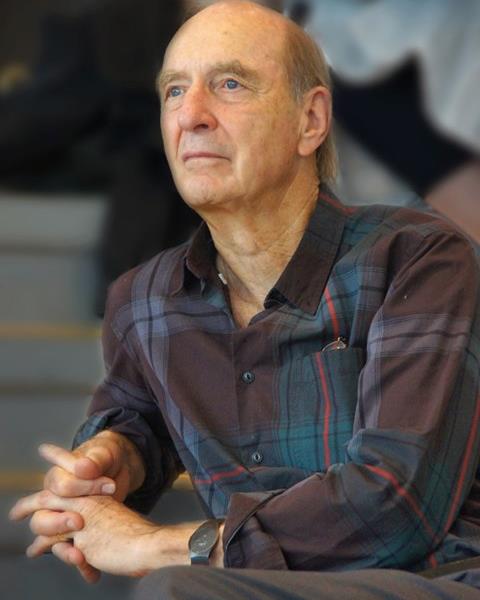
By Kenneth J. Gergen, President of the Taos Institute, January 2023
This is the time for pondering the past year, gauging the significance of our efforts, and exploring what is to come. As I see the Taos Institute’s activities of this past year, the overarching concern has been with the critical condition
of the world today – the challenges of environmental decay, the spread of deadly viruses, growing inequality, and the alienation and conflict among peoples, among others. These concerns were especially important in our mounting the online Gathering in mid-November. We invited proposals that would focus on how social constructionist ideas and practices might help to create new ways of going on together. How could we marshal relational resources for the global good? The response was exciting. Some 60 online events were scheduled over the week, with many presentations offered in multiple languages. The range of topics was vast, and often concerned with creating new ways of relating – from the local to the global. One high point included a conversation with David Cooperrider, a co-founder of the Taos Institute, focusing on an initiative that drew some 2,000 business leaders into dialogue on ways of contributing to world betterment. Conference participants included over 300 people from 44 countries.
We were especially pleased with the intensity of interest and discussion during the Gathering. For many years the Taos Institute has mounted in-person, international conferences. For the past three years, the pandemic has prevented our continuing. Many people missed these face-to-face gatherings, as they invited special forms of bonding. Thus, we were much concerned that a virtual meeting would fail to satisfy. As many attendees informed us, however, they felt a close and inspiring sense of community. This was indeed gratifying, and will be an important factor in how we next proceed.
While the Gathering was a focal point of the year, the Taos Institute has continued its many efforts as an educational nonprofit to foster constructionist, relational, and appreciative contributions to the social good. On the conference front, we followed up the 2021 virtual conference Educating as Relating with several more focused online meetings to continue the dialogues. This initiative was further sustained in our joining the Learning for Well-being Foundation, the Lifelong Learning Platform, and the University of Wales to offer an online symposium on Educational Evaluation for Well-being: Personal, Relational and Global. This event brought some 250 people together from around the world. The video will soon be available.
We continued to offer online courses on social construction and on relational theory, and will do so again this year. Collaborating with Associates Termumi Sameshima and Tomoko Higashimura, we launched our first-ever course in Japanese on social construction. We look for opportunities to expand such collaborations in other languages. We were pleased to publish The Protective Interview: Releasing the Tangled Web of Incest, by Elspeth McAdam, Peter Lang, Diana Henoa & Lennart Lorås. The work is included in our WorldShare book series, where over 50 books are offered free for downloading. We are also especially grateful to Alain Robiolio for his translating three of our Taos books into French. Gergen’s book, The Relational Imperative: Resources for a World on Edge, Hakansson’s Ordinary Life Therapy, and the Haslebos’ Practicing Relational Ethics. These books are now available on the WorldShare book webpage. Ten of our printed books were additionally converted to WorldShare books. And while on the subject of books, we offered
eight Dialogue with the Authorsevents, enabling interested readers to speak with authors of newly published books. The year culminated with the launch of the Taos Institute Online Community, a space offering many new possibilities for connection and sharing.
We are now looking forward to the coming year, to sustaining and building, and to inspirations for new initiatives. Our own special dream is to further pursuits that confront the daunting challenges confronting the world.
Video Message from Kenneth Gergen
Past messages from the Taos Institute President, Kenneth Gergen
- 2022 January Message
- 2021 January Message
- 2020 January Message
- 2019 January Message
- 2018 January Message
- 2017 January Message
- 2015 December Message
- 2014 December Message
- 2013 January Message
- 2012 January Message
- 2011 January Message
- 2009 January Message
- 2008 January Message
- 2007 January Message
- 2006 January Message
To learn more about the Taos Institute sign up for our newsletter and join our Taos Institute Commons online community (free).