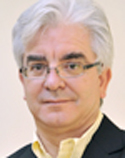
Roberto Arístegui, Ph.D.
Titular Professor
School of Psychology
University Adolfo Ibáñez
Chile
Email: roberto.aristegui@uai.cl
- Ph.D. Social Sciences, University of Tilburg.
- Ph.D. mention Epistemology of Social Sciences University of Chile.
- Master of Philosophy, major in Logic and Philosophy of Science University of Valparaiso.
- Psychologist, Pontifical Catholic University of Chile.
- Certificated in Strategic Systemic Brief Therapy.
- Accredited Clinical Supervisor.
Roberto is a permanent professor at the School of Psychology at the
Universidad Adolfo Ibáñez . He has developed teaching activities at the
undergraduate and post-graduate clinical and organizational areas. He
participates as a professor in the Master of Clinical Social
Constructionism, in the School of Psychology at the University Adolfo
Ibáñez. He has been an active member of the school team in the
implementation and training in Appreciative Inquiry Diplomas from 2007
onwards. He participates in training people in social learning
processes, in areas of health, education and politics, from the
appreciative and reflective thinking perspective. In this context it is
important to notice he has been in the Santiago learning community,
where group membership is based in the application and development of
dialogical practices. He specializes in philosophy of language and
epistemology of the social sciences, participating in psychological
doctoral training.
During the last 10 years he has developed the office and functions as a
professor of the Philosophy of Psychology, working in the Master degree
of clinical psychology. In this line of training, he has published
articles from the perspective of meaning construction, assuming the
concept of holism and performativity. Specifically, he has developed the
topic of indeterminacy of translation and speech acts, in processes of
change in therapy. He has also participated in research in psychotherapy
as a co-researcher in the area of speech acts in episodes of change in
the Catholic University of Chile and also in the Universidad Adolfo
Ibáñez. As a member of the speech acts team, he has participated in the
publication of articles that focused on various performativity
indicators, as the use of the first person in change episodes in
psychotherapy. In the research area he has also presented empirical
results and reflections at numerous conferences. He specializes in
philosophy of language, in the field of pragmatism and holism. His
learning as a clinical psychologist includes training as a clinical
psychologist in existential humanism, systemic brief strategic therapy,
hypnotherapy , and bodywork. As part of this clinical practice he
contacted the social constructionist epistemological line, regarding it
as a coherent development of the humanistic position he had initially
met, and now, reformulates it into a postmodern social setting to which
he adheres . He has worked as a clinical psychologist in private
practice in the care of adults, for 28 years. He is a clinical
supervisor accredited by the Society of Clinical Psychology of Chile. He
is currently developing the foundation of research that suggests a
cross between appreciative inquiry and mindfulness, from the social
constructionism perspective.