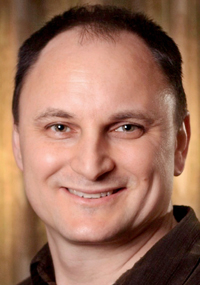
Stephen Shimshock, Ph.D.
Director of Systems, Data and Reporting
Casey Family Programs
Phone: 206-216-4178
Email: ssshimshock@casey.org
Stephen Shimshock currently works as the Director of Systems, Data and Reporting for Casey Family Programs in Seattle, Washington. He provides leadership and guidance on developing and implementing child welfare practices, especially in circumstances where the implementation involves a technical solution. He specializes in taking complex situations and creating easy to understand solutions. He is often referred to as a “translator” who can bridge the gap between the “shades of grey” seen in social services and the rigid “1s and 0s” view in the world of technology.
Stephen has a passion for finding low cost solutions that enable communities and groups to share and analyze information freely. He favors tools and analysis methods that provide multiple views of reality rather than a single “Truth.” In his doctoral research he worked with a group of public and private social service providers and several of the youth they serve in an effort to evaluate the work of the service providers. In this project he eliminated the role of “researcher” and used himself as a “facilitator” of a research process that was largely carried out by the service providers and the youth they serve. Data analysis and sense making was broken down into many tasks that were completed by self-selected participants in the project. Carrying out research in this way results in very locally relevant information from which the participants can take action. Stephen is quick to remind people that this type of research does not result in “best practices.” In fact, he dislikes the term “best practice” because it implies the best is in the practice rather than the practitioner. He focuses on interventions that foster an environment of “best practitioners.”
Stephen has a B.A in Music Theory and Composition, an M.A. in Counseling Psychology, and a Ph.D. in Social Science from Tilburg University.